
It’s November. You leave the house in the half-light, spend the day under ceiling lights, and by the time you’re heading home it’s dark again. If you’re struggling to remember the last time you were properly outside, you’re not the only one.
We spend 22 hours a day indoors
According to an Opinium survey, the average Brit spends 22 hours a day indoors, which is around 90% of the day. Over a year, that adds up to more than 330 days inside.
Where do your remaining two hours go? The walk from the front door to the car. Standing on the platform while the train’s delayed. Taking the bins out. Waiting at the school gate. All of it technically outdoors, but rarely an intentional choice, and almost never long enough to notice.
And in the winter months when it’s dark at both ends of the working day, most of us probably don’t get anywhere near two hours.
What the research says
In 2019, researchers at the University of Exeter set out to find the perfect dose. Using data from nearly 20,000 people in England, they found that people who spent at least 120 minutes a week in nature were significantly more likely to experience good health and higher wellbeing than people who spent no time there.
The same year, a University of Michigan study measured what happens in the body during time outside. They found that twenty minutes was enough to significantly lower cortisol, the body’s main stress hormone. The steepest drop came between 20 and 30 minutes of sitting or walking somewhere that felt like nature.
None of it depended on exercise or effort, as they found sitting outside had the same benefits. Being somewhere green without a screen in your hand was enough.
Most of us already know this. 84% of adults in England agree that being in nature makes them feel happier, and 89% of people who get out regularly say it’s good for their mental health.
Why most weekends away don’t fix it
When we’re run down, the instinct is to book a break. But think about how most breaks actually go. A city break is museums, restaurants, shops and a hotel room. A spa weekend is a lot of time in a robe under soft lighting. Both are lovely, but you can still come home having been just as indoors as before you left.
To close the gap, being outside has to be what you do by default, not one more thing to fit into the schedule.
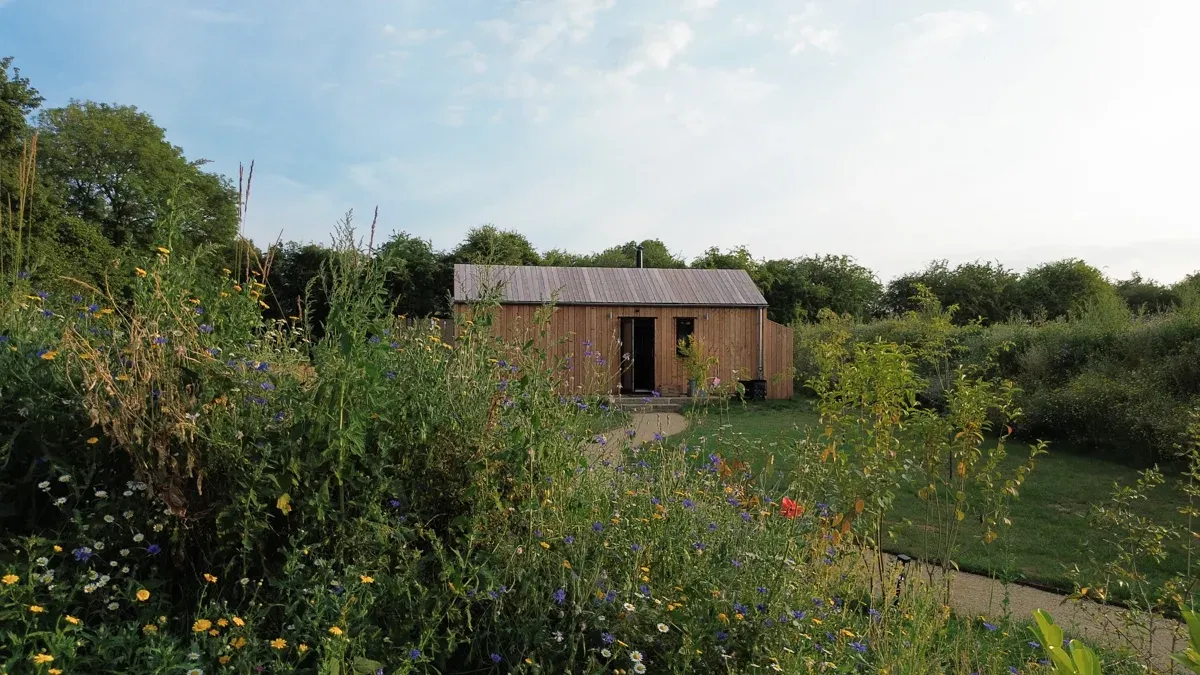
What being properly outside looks like at The Wild Root
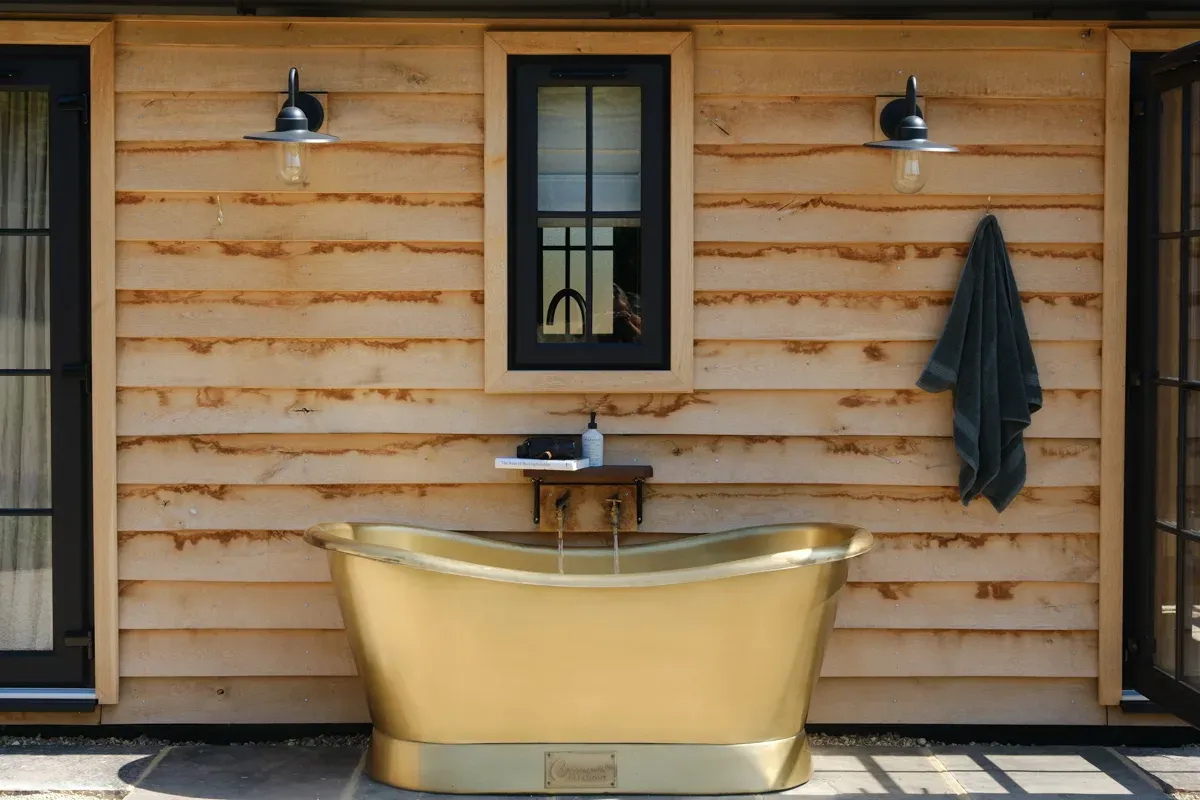
At The Wild Root, most of the stay happens outside. Each cabin has its own outdoor bath (copper at Dusk, brass at Ember, tin at Rise), so a cold, November evening is spent up to your shoulders in warm, bubbly water, watching your breath rise into the dark, no matter the weather.
The fire pits move dinner, and the long conversation after it, outside too (with plenty of blankets to stay cosy). The Haze sauna and its cold outdoor shower take you between hot and cold under an open sky with the countryside to stare out at from the panoramic window. And all around you is the Chilterns countryside, with Wendover Woods and Coombe Hill close by for a proper walk if you fancy the movement.
A slow morning walk, an hour in the bath, an evening by the fire. You’ll pass two hours before the first day is out without having to try.
Small ways to close the gap at home
Count your minutes for a week
Most of us think we spend more time outside than we do.
Take the 20-minute dose
Lunch on a bench wrapped up in your coat, a lap of the park, a coffee drunk outside instead of at your desk.
Stack it onto something you already do
Take phone calls on foot, or walk to the shops instead of driving.
Spread it out
120 minutes across a week works just as well as one big walk at the weekend.
Dress for it
Weather is the number one reason people give for staying in, but there’s no such thing as bad weather, just bad preparation.
Go out after dark
Shorter days don’t have to mean fewer minutes outside. An evening walk can be a lovely way to wind down.
It’s Self Care Week (16–22 November), and National Tree Week starts on the 21st. Both are a good excuse to look at where your two hours are coming from this week.
Sources
- Natural England, The People and Nature Survey for England: Adults Year 6 annual report (April 2025 – March 2026)
- White, M. et al. (2019), “Spending at least 120 minutes a week in nature is associated with good health and wellbeing”, Scientific Reports, reported via ScienceDaily
- Hunter, M.R. et al. (2019), “Urban nature experiences reduce stress in the context of daily life based on salivary biomarkers”, Frontiers in Psychology
- Opinium, “Brits spend 90% of their time indoors”, 2018